
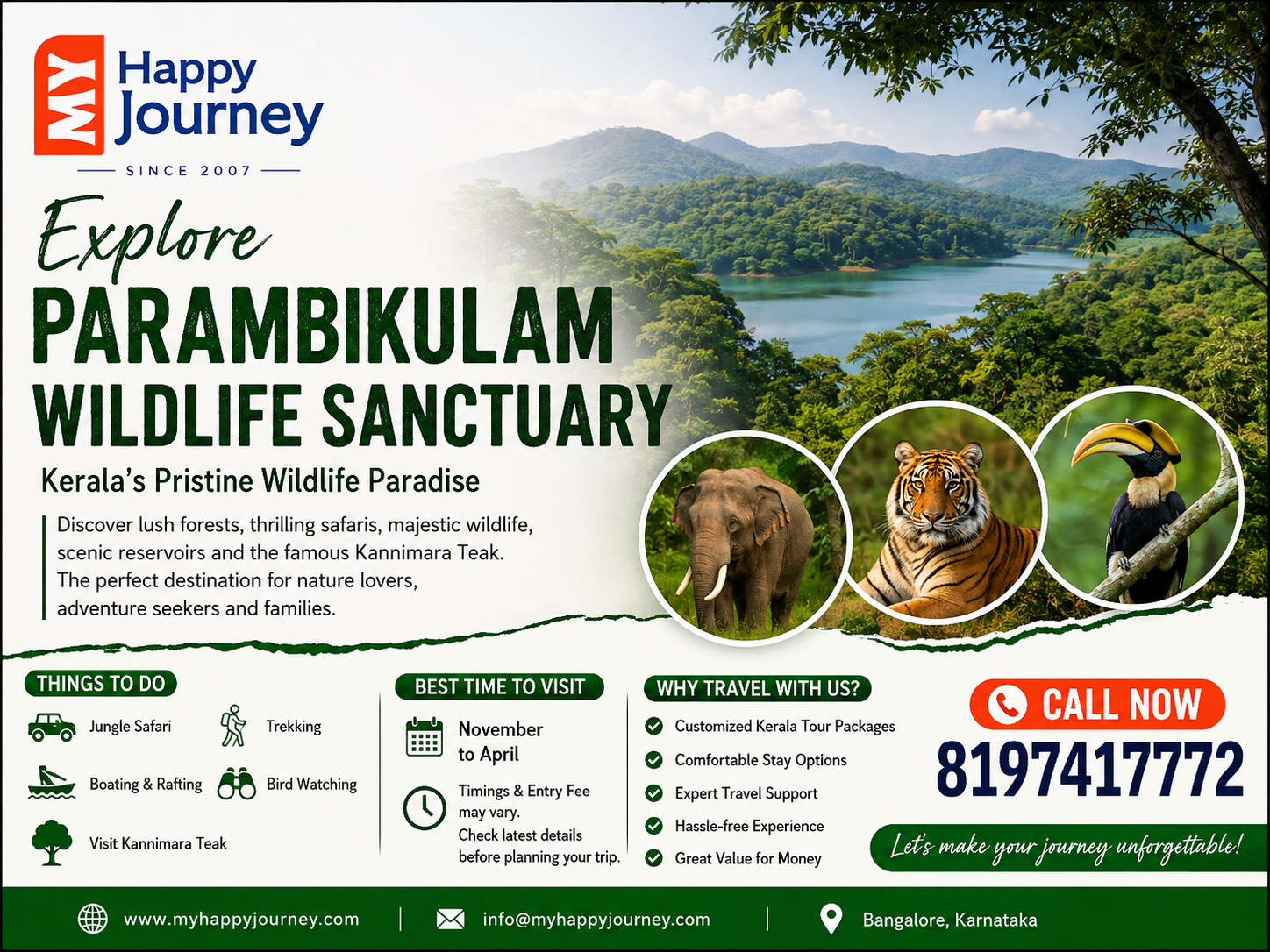
Complete Travel Guide for Wildlife Lovers
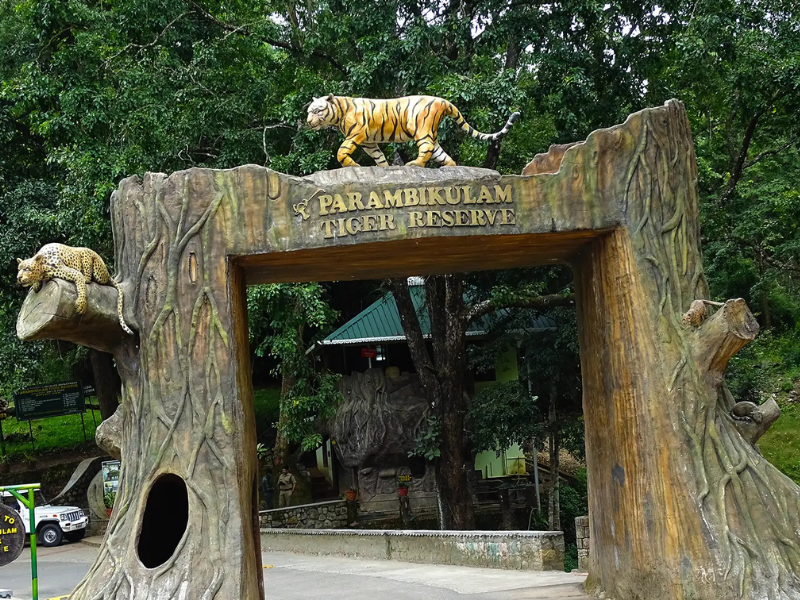
If you are looking for a wildlife experience in Kerala that feels genuinely close to nature, Parambikulam Wildlife Sanctuary deserves a place on your travel list. Tucked away in the Western Ghats of Palakkad district, Parambikulam is a beautiful mix of dense forests, hills, reservoirs, teak plantations and rich wildlife.
Unlike a typical sightseeing destination where you move from one attraction to another, a visit to Parambikulam is more about slowing down and experiencing the forest. You may find yourself watching a herd of elephants near a waterbody, listening to birds hidden among the trees, walking through old teak plantations or simply enjoying the silence of the Western Ghats.
Today, the protected landscape is officially known as Parambikulam Tiger Reserve, covering about 643.66 sq. km, including core and buffer areas. It was declared a Tiger Reserve in 2009.
If you are planning a wildlife holiday in Kerala, this Parambikulam Wildlife Sanctuary travel guide covers the location, best time to visit, things to do, entry fees, timings, how to reach and practical tips.
Parambikulam Wildlife Sanctuary at a Glance
| Information | Details |
|---|---|
| Location | Chittur Taluk, Palakkad district, Kerala |
| Present status | Parambikulam Tiger Reserve |
| Landscape | Western Ghats |
| Area | Approximately 643.66 sq. km |
| Famous for | Wildlife, forests, teak plantations, trekking and eco-tourism |
| Major wildlife | Elephants, tigers, leopards, gaur, deer and many bird species |
| Famous tree | Kannimara Teak |
| Nearest major access town | Pollachi, Tamil Nadu |
| Best season | Generally November to April |
| Main experiences | Jungle safari, trekking, boating and nature-based activities |
Parambikulam forms part of the Nelliyampathy–Anamalai ecological landscape of the Southern Western Ghats.
Where Is Parambikulam Wildlife Sanctuary?
The Parambikulam Wildlife Sanctuary location is in Chittur Taluk of Palakkad district in Kerala, within the Western Ghats. The reserve lies between the Anamalai Hills of Tamil Nadu and the Nelliyampathy ranges of Kerala.
Although it is located in Kerala, many travellers reach Parambikulam through Pollachi in Tamil Nadu. This is an important point to remember when planning your route.
From Palakkad, the reserve is roughly 90–100 km by road depending on the route and access point. Kerala Tourism lists Pollachi as an important nearby town and Palakkad Junction as a nearby railway station.
Why Visit Parambikulam?
Parambikulam is not just about spotting a tiger.
In fact, wildlife sightings are never guaranteed in a forest. What makes Parambikulam special is the entire experience of entering a protected Western Ghats landscape.
The reserve is home to a remarkable variety of mammals, birds, reptiles, amphibians, fish, butterflies and insects. Kerala Tourism records around 40 species of mammals, 47 species of fish and about 250 species of birds in the reserve.
You can also experience:
- Dense evergreen and moist deciduous forests
- Bamboo groves
- Grasslands
- Mountain landscapes
- Reservoirs and dams
- Teak plantations
- Guided wildlife safaris
- Trekking
- Birdwatching
- Boating and bamboo rafting
- Indigenous tribal heritage
For photographers and birdwatchers, the destination can be especially rewarding.
Wildlife You Can See in Parambikulam
One of the biggest attractions of Parambikulam wildlife tourism is its biodiversity.
Depending on the season, location and luck, visitors may encounter:
- Bengal tiger
- Asian elephant
- Leopard
- Gaur or Indian bison
- Sambar deer
- Spotted deer
- Wild boar
- Nilgiri langur
- Bonnet macaque
- Malabar giant squirrel
- Various reptiles and amphibians
- Numerous species of birds
The reserve is particularly interesting for birdwatchers, with species such as hornbills, eagles and other forest birds recorded here.
Can you see a tiger?
Yes, tigers live in the reserve, but a tiger sighting is never guaranteed.
Wildlife sightings depend on many factors, including weather, season, time of day and the animal’s movement. A good safari should therefore be viewed as a chance to experience the forest rather than a promise of seeing a particular animal.
The Famous Kannimara Teak
One of the most fascinating attractions in Parambikulam is the Kannimara Teak.
Parambikulam is known for its scientifically managed teak plantations, and Kannimara is regarded as one of the reserve’s most remarkable trees. Kerala Tourism describes it as the oldest and largest teak tree of its kind, with local tribal communities attaching cultural significance to it.
Standing beside an enormous teak tree in the middle of the forest is a very different experience from visiting a conventional tourist attraction.
It gives you an idea of the age and scale of the forest ecosystem that surrounds Parambikulam.
Things to Do in Parambikulam Wildlife Sanctuary
1. Go on a Jungle Safari
A jungle safari is one of the easiest ways to experience the reserve.
Safari programmes allow visitors to travel through designated forest areas with trained guides and experience the landscape while looking for wildlife.
You might see elephants, gaur, deer, monkeys and birds along the route. And if luck is on your side, you could get a glimpse of one of the reserve’s larger predators.
Kerala Tourism currently lists jungle safari and other eco-tourism programmes among the experiences available at Parambikulam.
2. Explore the Forest on a Trek
For travellers who enjoy walking, Parambikulam offers several trekking experiences.
The reserve has varied terrain, including valleys, slopes, teak plantations, grasslands and dense forest.
Some trails listed by Kerala Tourism include the Bear Path Trail and Kariyanshola Trail. Trekking routes can involve forest terrain and may require appropriate preparation.
Always follow the instructions of the forest department and your guide.
3. Enjoy the Reservoirs and Boating
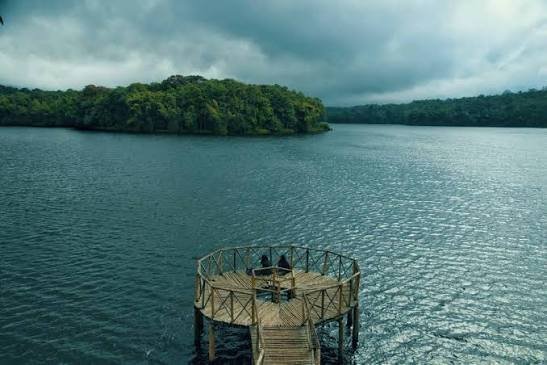
Parambikulam is also known for its beautiful water bodies.
The forested hills surrounding the reservoirs create some of the most scenic views in the region. Depending on the programme available during your visit, boating or rafting can add another dimension to your wildlife experience.
The combination of calm water, forested hills and the possibility of spotting wildlife around the shoreline makes this one of the more memorable experiences in Parambikulam.
4. Go Birdwatching
You don’t have to be an expert birdwatcher to enjoy Parambikulam.
Early mornings in the forest are filled with bird calls, and the reserve’s diverse habitats support a large variety of bird species.
Carry binoculars if you have them and avoid making unnecessary noise.
For serious birdwatchers, spending more time inside the reserve can be much more rewarding than rushing through a short visit.
5. Experience the Local Tribal Heritage
Parambikulam is also connected with indigenous communities who have traditionally lived in the forest landscape.
The reserve’s eco-tourism approach incorporates local participation, including opportunities related to guiding and cultural experiences. Kerala Tourism also highlights the tribal heritage associated with Parambikulam.
This makes the destination more than a wildlife-viewing trip—it can also provide an insight into the relationship between local communities and the forest.
Parambikulam Wildlife Sanctuary Timings
Parambikulam Wildlife Sanctuary timings can vary depending on the activity and eco-tourism programme.
Older Kerala Tourism information mentions visitor access during daytime hours, while current tourism material lists specific safari and programme schedules separately.
For this reason, travellers should confirm the latest reporting time, safari timing and entry conditions before travelling.
This is particularly important if you are planning your visit around a particular safari or trekking programme.
Do not assume that arriving at the reserve at any time of the day will allow you to enter the forest.
Parambikulam Wildlife Sanctuary Entry Fee
There isn’t necessarily one simple “entry ticket” that covers every experience inside Parambikulam.
The cost can depend on the eco-tourism activity, safari, trekking programme, vehicle, accommodation and other applicable charges.
Kerala Tourism currently lists individual eco-tourism programmes with their own pricing. For example, its published information lists a jungle safari package separately from trekking and accommodation programmes.
Some Kerala Tourism publications have also listed an entry fee separately, but rates and programme structures can change.
What should you do?
Before your trip, check the latest official booking information for:
- Entry charges
- Safari charges
- Trekking fees
- Boating charges
- Vehicle charges
- Guide fees
- Accommodation
- Taxes and applicable additional charges
This is much safer than relying on an old blog or social-media post for the Parambikulam Wildlife Sanctuary ticket price.
Parambikulam Wildlife Sanctuary Best Time to Visit
The Parambikulam Wildlife Sanctuary best time to visit is generally considered to be from November to April.
During this period, weather conditions are usually more comfortable for outdoor activities and wildlife exploration. Kerala Tourism specifically identifies November to April as a favourable period for visiting the reserve.
November to February
This is a comfortable period for travellers who prefer cooler weather.
It is a good choice for:
- Wildlife safaris
- Trekking
- Birdwatching
- Photography
- Family trips
March to April
The weather becomes warmer, but wildlife can sometimes be easier to look for around water sources.
If you are visiting during the hotter months, carry sufficient drinking water and protect yourself from the sun.
Monsoon
Parambikulam becomes beautifully green during the rainy season, but heavy rain can affect outdoor activities, road conditions and eco-tourism programmes.
Because activities can be modified or cancelled depending on weather and forest conditions, always check the current situation before travelling.
Parambikulam Wildlife Sanctuary Weather
The Parambikulam Wildlife Sanctuary weather is influenced by its location in the Western Ghats and its forested, mountainous terrain.
Expect:
- Pleasant conditions during the cooler months
- Warmer afternoons during summer
- Higher humidity
- Rainfall during the monsoon
- Cooler conditions in elevated forest areas
Weather can also change quickly inside the forest.
If you’re visiting for trekking, carry comfortable walking shoes, light clothing, rain protection when appropriate and insect protection.
How to Reach Parambikulam
By Road
Road travel is the most practical option for reaching Parambikulam.
A commonly used approach is through Pollachi in Tamil Nadu, followed by the road towards Parambikulam.
Kerala Tourism lists the reserve at roughly 90 km from Palakkad by road and about 111 km from Coimbatore International Airport.
Because access into protected forest areas is controlled, reaching the general location by car does not mean you can freely drive through all tourism zones.
By Train
Palakkad Junction and Pollachi are among the nearest railway options depending on your route.
Kerala Tourism lists Palakkad Railway Station at approximately 95 km from the reserve.
From the railway station, you can continue by road.
By Air
Coimbatore International Airport is one of the most practical airport options for travellers approaching Parambikulam.
Kerala Tourism’s eco-tourism information places the airport roughly 111 km from the reserve.
For travellers arriving from other parts of India, Coimbatore can therefore be a convenient starting point for a Parambikulam trip.
Can You Take Your Private Car Inside Parambikulam?
This is an important question for travellers planning a road trip.
Parambikulam is a protected forest and tourism access is controlled.
Visitors should not assume that they can simply drive their private vehicle wherever they want inside the reserve.
Organized eco-tourism activities, safari vehicles, guides and designated routes are used for tourism experiences.
If your holiday includes Parambikulam, plan the forest experience around the official tourism programme rather than treating it like an ordinary road-trip sightseeing stop.
How Many Days Do You Need in Parambikulam?
For a quick introduction to the destination, one full day can work.
However, wildlife enthusiasts should consider spending more time.
1 Day
Suitable for:
- Jungle safari
- Basic sightseeing
- Forest experience
- Short visit to major attractions
2 Days
A better option if you want to combine:
- Safari
- Trekking
- Boating
- Kannimara Teak
- Relaxation in the forest
2–3 Days
Ideal for serious nature lovers, birdwatchers and photographers who want a slower experience.
The advantage of staying longer is that you aren’t trying to squeeze the entire forest experience into a few hours.
Where to Stay in Parambikulam
Accommodation inside and around the reserve can include eco-tourism and forest-based stays, depending on current availability.
Kerala Tourism lists options such as jungle camps and island-based accommodation programmes, with advance booking required for certain experiences.
You can also consider staying in nearby towns such as Pollachi if you prefer more conventional accommodation.
For an authentic wildlife experience, however, staying within an officially operated eco-tourism facility can make the trip feel much more immersive.
Always check the current availability before finalizing your itinerary.
Who Should Visit Parambikulam?
Families
Families who enjoy nature and wildlife can have a memorable experience here. However, parents should consider the duration of safaris and trekking activities when travelling with young children.
Couples
If you prefer quiet nature experiences over crowded tourist attractions, Parambikulam can be a wonderful addition to a Kerala holiday.
Wildlife Enthusiasts
This is where Parambikulam really stands out.
The combination of wildlife, forest habitats, trekking and birdwatching makes it an excellent destination for nature lovers.
Photographers
Forest landscapes, birds, elephants, teak plantations and reservoirs provide plenty of photography opportunities.
Remember that wildlife photography requires patience. The best photograph is often the one you wait for rather than the one you chase.
Adventure Travellers
Trekking, rafting, safari experiences and forest stays make Parambikulam an interesting choice for travellers looking for something beyond conventional sightseeing.
Practical Travel Tips for Parambikulam
Before travelling, keep these tips in mind:
- Book eco-tourism activities in advance whenever possible.
- Confirm the latest timings and charges before leaving.
- Carry a valid government-issued ID.
- Wear comfortable shoes if you plan to trek.
- Carry drinking water.
- Keep insect repellent with you.
- Avoid loud music and unnecessary noise.
- Do not feed or approach wild animals.
- Follow the instructions of forest officials and guides.
- Avoid carrying plastic and dispose of waste responsibly.
- Carry rain protection during wet-weather months.
- Keep your camera ready, but don’t let photography distract you from the experience.
- Be patient during wildlife safaris—sightings are unpredictable.
- Check weather and forest conditions before travelling.
Is Parambikulam Worth Visiting?
Absolutely—especially if you enjoy forests more than crowded tourist attractions.
Parambikulam offers something that is becoming increasingly difficult to find: the opportunity to experience a large, protected forest landscape with relatively little distraction.
You come here for the possibility of seeing wildlife, but you leave remembering much more—the sound of birds in the morning, enormous teak trees, quiet reservoirs, mist-covered hills and the feeling of being surrounded by wilderness.
A trip to Parambikulam Wildlife Sanctuary in Kerala is therefore best planned as a nature experience rather than a checklist of attractions.
Parambikulam Wildlife Sanctuary FAQs
1. What is Parambikulam Wildlife Sanctuary famous for?
Parambikulam is famous for its rich Western Ghats biodiversity, forests, elephants, wildlife, reservoirs, trekking and nature-based tourism.
It is also one of Kerala’s important tiger landscapes. The Kerala Forest Department describes Parambikulam as a tiger reserve and biodiversity hotspot, with activities including vehicle safari, trekking, birdwatching, wildlife viewing, camping and nature camps.
What makes Parambikulam particularly interesting is that it is not just about spotting animals. The forests, reservoirs, mountain scenery and guided nature experiences are all part of the attraction.
2. Is Parambikulam Wildlife Sanctuary the same as Parambikulam Tiger Reserve?
This is one of the most common questions travellers have.
Not exactly.
Parambikulam Wildlife Sanctuary was established in 1973 and covers about 285 sq km. It subsequently became part of the larger Parambikulam Tiger Reserve.
The Tiger Reserve was notified in 2009. According to the Kerala Forest Department, it has a total area of 643.66 sq km, consisting of approximately 390.89 sq km of core area and 252.77 sq km of buffer area.
For travellers searching online, however, both names are commonly used.
3. Where is Parambikulam Wildlife Sanctuary located?
Parambikulam is located in Palakkad district of Kerala, in the Western Ghats.
It lies in a forest landscape close to the Kerala–Tamil Nadu border and is accessed through the Pollachi side of Tamil Nadu for many travellers.
The Kerala Forest Department lists Parambikulam as approximately 100 km from Palakkad, 100 km from Coimbatore and 120 km from Thrissur.
4. How do I reach Parambikulam Wildlife Sanctuary?
The route depends on where you are starting from.
For many travellers, the practical approach is:
Pollachi → Anamalai → Parambikulam
If travelling from Kerala, you can approach through Palakkad and then continue towards the reserve.
Because Parambikulam is a protected forest area with controlled access, this is not a destination where you should simply drive into the forest without checking the current entry and tourism arrangements.
5. How far is Parambikulam from Palakkad?
Parambikulam is approximately 90–100 km from Palakkad, depending on the route and starting point.
The Kerala Forest Department’s published tourism information gives the distance as approximately 100 km from Palakkad.
Because the journey includes forest roads and access restrictions, travel time can be considerably longer than you might expect from the distance alone.
6. How far is Parambikulam from Coimbatore?
Parambikulam is approximately 100 km from Coimbatore, according to Kerala Forest Department tourism information.
This makes Coimbatore an important gateway for travellers coming from Tamil Nadu.
If you are planning a trip from Bangalore, Coimbatore can also work as a convenient transit point depending on your route.
7. How far is Parambikulam from Pollachi?
Pollachi is one of the closest major towns and practical access points for travellers heading towards Parambikulam.
Older Kerala Forest Department tourism information lists Parambikulam at approximately 42 km from Pollachi.
The actual journey time can vary because of the forest route, check-post procedures and current access conditions.
8. What animals can I see at Parambikulam?
Parambikulam supports a wide range of wildlife associated with the Western Ghats.
Depending on the area and season, visitors may encounter:
- Elephants
- Tigers
- Leopards
- Gaur
- Sambar
- Spotted deer
- Wild boar
- Malabar giant squirrels
- Various monkeys
- Numerous bird species
However, it is important to remember that this is a wild forest, not a zoo. Seeing a particular animal cannot be guaranteed.
9. Can I see elephants in Parambikulam?
Yes. Elephants are among the wildlife highlights of Parambikulam.
The extensive forest and water resources create suitable habitat for elephants, and sightings can happen during wildlife drives and other authorised activities.
Still, wildlife movement changes constantly. You might see elephants on one visit and spend another day seeing deer, gaur and birds instead.
10. Can I see tigers in Parambikulam?
Yes, Parambikulam is a tiger reserve and provides important tiger habitat.
But if you are planning a trip specifically to see a tiger, keep your expectations realistic.
Tiger sightings are never guaranteed.
The reserve’s main purpose is conservation, and tourism is regulated to minimise disturbance to wildlife. The Kerala Forest Department specifically emphasises designated tourism areas, responsible conduct and low-impact activities in tiger reserves.
11. Is Parambikulam good for wildlife photography?
Absolutely.
Parambikulam can be particularly rewarding for photographers interested in:
- Elephants
- Deer
- Gaur
- Birds
- Forest landscapes
- Reservoirs
- Butterflies
- Trees and plants
A telephoto lens and binoculars can be useful, especially because animals may remain some distance from the vehicle.
The best approach is to photograph wildlife without disturbing or chasing it.
12. Is Parambikulam good for birdwatching?
Yes.
The Kerala Forest Department specifically lists birdwatching among the activities available at Parambikulam.
The combination of evergreen forests, water bodies and varied habitats makes the reserve interesting for bird enthusiasts.
If birdwatching is your main purpose, consider carrying binoculars and planning a slower itinerary instead of trying to cover the destination quickly.
13. What birds can I see in Parambikulam?
The Western Ghats habitat supports a wide variety of forest birds.
Depending on the season and location, birdwatchers may encounter hornbills, woodpeckers, kingfishers, drongos, barbets, cuckoos, eagles and several other forest species.
The exact birds you see will depend on weather, season, habitat and luck.
14. What is the best time to visit Parambikulam Wildlife Sanctuary?
For a comfortable wildlife trip, the drier months are generally a popular choice, particularly from around October through March.
The forest remains beautiful during the monsoon, but heavy rain can affect visibility, roads and tourism activities.
For wildlife photography, the warmer months can also be interesting because animals may spend more time around water.
The most important thing is to check the current tourism status before travelling because forest activities can change according to conditions.
15. Is Parambikulam worth visiting during the monsoon?
It can be beautiful during the monsoon.
The forest becomes incredibly green, waterfalls and streams become more active and the landscape looks very different from the dry season.
However, if your primary goal is wildlife sightings, you may prefer a drier period.
If you are more interested in forests, scenery and photography, the monsoon can provide a completely different experience.
16. What can I do at Parambikulam?
There is more to Parambikulam than a standard wildlife safari.
The Kerala Forest Department lists activities such as:
- Vehicle safari
- Trekking
- Birdwatching
- Wildlife viewing
- Dam viewpoints
- Camping
- Nature camps
- Forest experiences
Several accommodation and camping options are also associated with the reserve.
17. Is a jeep safari available at Parambikulam?
Yes. Vehicle safari is one of the main tourist activities at Parambikulam.
The Forest Department lists vehicle safari as an available activity and also provides information about jungle safari programmes.
Safari routes and availability can change, so it is best to check the current programme when making your booking.
18. How long does the Parambikulam safari take?
Safari duration depends on the particular programme and route.
Older Forest Department information described a vehicle safari covering approximately 52 km over around three and a half hours.
However, visitors should verify the current safari itinerary rather than assuming the older duration is still applicable.
19. Do I need to book the Parambikulam safari in advance?
Yes, advance booking is strongly recommended.
Parambikulam’s official booking policy states that ecotourism programme bookings are normally made online through the official Parambikulam website. The reserve also warns visitors against relying on unauthorised booking websites.
The current Kerala Forest Ecotourism portal also lists Parambikulam among its bookable ecotourism destinations and states that online reservations open up to 45 days before the visit.
20. Can I book Parambikulam through a travel agent?
This is an area where travellers should be careful.
The official Parambikulam booking policy says reservations are to be made online through the official Parambikulam website and specifically warns that the reserve does not operate other websites or accept responsibility for losses through unauthorised websites or travel agents.
If you are booking a complete Kerala tour package through a travel company, make sure you understand whether the company is arranging transport and itinerary support or actually making the official reserve booking on your behalf.
21. How far in advance can I book Parambikulam ecotourism activities?
The current Kerala Forest Ecotourism portal says online bookings open 45 days in advance of the visit, activity or stay.
For popular dates, booking early is sensible because availability can be limited.
22. Can I get a spot booking at Parambikulam?
Spot bookings may be possible in certain circumstances, but you should not depend on them.
The official Parambikulam booking policy states that spot bookings are undertaken only at the discretion of the reserve authorities and in unforeseen circumstances.
If you are travelling a long distance specifically for Parambikulam, advance booking is the safer option.
23. Can I drive my own car inside Parambikulam?
You should not treat Parambikulam like a normal road-trip destination where you can freely drive wherever you want.
The reserve has controlled forest access and authorised tourism activities. Vehicle safari is offered as a regulated activity, and visitors need to follow the instructions of the reserve authorities.
24. Is Parambikulam suitable for a family trip?
Yes.
A Parambikulam trip can work very well for families who enjoy:
- Wildlife
- Forests
- Photography
- Birdwatching
- Nature
- Short outdoor activities
Children often find the possibility of seeing elephants, deer and birds particularly exciting.
Parents should remember that this is a protected wildlife area, so children need to follow the guide’s instructions and remain with the group.
25. Is Parambikulam suitable for senior citizens?
Yes, provided you select activities according to your comfort level.
A vehicle-based safari and a comfortable forest stay may be much easier for senior travellers than a demanding trek.
If anyone in your group has mobility limitations, check the activity details before booking.
26. Can I go trekking at Parambikulam?
Yes.
Trekking is one of the authorised activities listed by the Kerala Forest Department for Parambikulam.
The important point is that trekking should be done through authorised programmes and with the appropriate forest staff or guides.
Do not attempt to explore restricted forest areas independently.
27. Is Parambikulam good for camping?
Yes. Camping and nature camps are among the experiences associated with Parambikulam.
The Forest Department lists several accommodation and camping options, including tented accommodation, tree-top huts and other forest stays.
Availability and pricing vary by programme and date.
28. Can I stay inside Parambikulam Tiger Reserve?
Yes, authorised accommodation is available, depending on the current programme and availability.
Published Forest Department information lists options such as:
- Tented niche
- Honey comb accommodation
- Tree-top huts
- Island nest accommodation
- Cheetal Valley
- Bison Valley
- Bear Hut
The reserve’s tourism facilities can change, so check the current booking portal for what is actually available for your travel dates.
29. Is staying inside Parambikulam better than staying outside?
If you love nature, staying inside or at an authorised forest accommodation can make the trip much more immersive.
You get more time to experience the forest rather than travelling back and forth from a town.
For a simple wildlife visit, however, a day trip may be enough.
For a real Parambikulam experience, I would consider staying overnight if a suitable authorised accommodation is available.
30. What is the “Tree Top Hut” experience at Parambikulam?
Tree-top accommodation is one of the distinctive experiences associated with Parambikulam.
The Kerala Forest Department lists tree-top huts at Thunakadavu and Parambikulam among the accommodation options.
This type of stay appeals particularly to travellers looking for a forest experience rather than a conventional hotel.
Availability should always be checked before planning your trip around it.
31. Is Parambikulam good for couples?
Yes.
Couples who enjoy quiet destinations, forests and outdoor experiences may find Parambikulam a refreshing alternative to the usual Kerala tourist circuit.
A combination of forest stay + safari + nature experience + reservoir views can make for a memorable short getaway.
32. Is Parambikulam suitable for a honeymoon?
It can be, particularly for couples who prefer nature and adventure over luxury resort sightseeing.
You could combine Parambikulam with destinations such as:
- Valparai
- Athirapilly
- Munnar
- Nelliyampathy
- Palakkad
The exact combination depends on how many days you have.
33. What should I carry for a Parambikulam safari?
You do not need to overpack.
Carry:
- Comfortable clothes
- Comfortable walking shoes
- Drinking water
- Sunglasses
- Hat or cap
- Binoculars
- Camera
- Light rain protection
- Insect repellent
- Personal medicines
A small backpack is generally more convenient than large luggage during a safari.
34. What should I wear at Parambikulam?
Comfortable, lightweight clothing is the best choice.
For forest activities, earthy or muted colours are generally preferable to extremely bright clothing.
If you are planning trekking, proper walking shoes are much more important than fashionable footwear.
35. Can I take photographs at Parambikulam?
Yes.
Parambikulam is an excellent place for nature photography.
You can photograph:
- Wildlife
- Birds
- Forest landscapes
- Reservoirs
- Trees
- Butterflies
- Mountains
Camera charges may apply depending on the current tariff. Published Forest Department tariff information has included separate charges for still and video cameras.
36. Can I see wildlife during every safari?
No, and this is something every traveller should understand before visiting.
Wild animals move freely through the forest. Some days can produce several sightings, while another safari might involve mostly birds, tracks and beautiful forest scenery.
If someone promises you a guaranteed tiger or elephant sighting, be cautious.
37. What is the best time of day for wildlife viewing?
Early morning and late afternoon are generally good periods for wildlife activity.
Animals tend to avoid the hottest parts of the day, although sightings can happen at any time.
If wildlife is your main reason for visiting, it is worth considering more than one authorised activity rather than relying on a single safari.
38. Is Parambikulam crowded?
It can be busier during:
- Weekends
- School holidays
- Public holidays
- Peak Kerala tourism seasons
If you prefer a quieter experience, a weekday visit is worth considering.
Advance booking is also useful because the reserve operates regulated tourism rather than unlimited visitor access.
39. Is Parambikulam safe for tourists?
Yes, when you follow the rules.
The most important thing to remember is that you are inside a wildlife habitat.
Never:
- Feed animals
- Get out of the vehicle without permission
- Approach wildlife
- Make loud noises
- Throw waste
- Try to attract animals for photographs
- Wander into restricted areas
The Kerala Forest Department specifically stresses responsible tourism, designated routes and avoiding disturbance to wildlife in tiger reserves.
40. Can I feed animals at Parambikulam?
No.
Feeding wild animals can change their behaviour and create dangerous situations for both animals and visitors.
Enjoy wildlife from a safe distance and allow animals to behave naturally.
41. Can I get out of the safari vehicle?
You should only get out where the authorised programme and forest staff permit it.
Never step out simply because you have spotted an elephant, gaur or other animal.
Wildlife can move surprisingly quickly, and maintaining a safe distance is essential.
42. Is Parambikulam better than Wayanad Wildlife Sanctuary?
Both are excellent, but the experience is different.
Wayanad Wildlife Sanctuary is often easier to include in a conventional Wayanad holiday, particularly if you are already visiting Sulthan Bathery or Mananthavady.
Parambikulam offers a more immersive forest experience with regulated tourism, camping, trekking, reservoirs and longer nature-based programmes.
If you want a straightforward wildlife safari during a Wayanad holiday, choose Wayanad.
If you want a dedicated forest and wildlife experience, Parambikulam is worth considering.
43. Is Parambikulam better than Periyar for wildlife?
Again, it depends on what kind of trip you want.
Periyar Tiger Reserve is one of Kerala’s most established wildlife tourism destinations and has a broader range of well-known tourist activities.
Parambikulam can feel more quiet, remote and forest-focused, especially when you stay inside an authorised forest accommodation.
For someone looking for a less conventional wildlife holiday, Parambikulam can be a great choice.
44. Can I visit Parambikulam and Athirapilly together?
Yes, although you need to plan the route carefully.
A multi-day itinerary can combine:
Kochi → Athirapilly → Parambikulam → Palakkad
or, depending on your starting point:
Coimbatore → Pollachi → Parambikulam → Athirapilly → Kochi
The best route depends on your arrival and departure points.
45. Can I combine Parambikulam with Valparai?
Yes, and this can be an excellent Western Ghats road-trip combination.
Parambikulam + Valparai gives you a mix of protected forests, mountain roads, tea plantations, wildlife and scenic viewpoints.
However, check current forest-road access and entry restrictions before finalising the route.
46. Can I visit Parambikulam from Bangalore?
Yes, but it is better planned as a multi-day trip rather than a quick weekend sightseeing stop.
A possible route is:
Bangalore → Coimbatore → Pollachi → Parambikulam
You can then continue towards Valparai, Athirapilly or Palakkad depending on your itinerary.
47. Can I visit Parambikulam from Kochi?
Yes.
For travellers starting from Kochi, Parambikulam can be included in a longer Kerala itinerary.
A possible route could be:
Kochi → Athirapilly → Parambikulam → Palakkad
This works particularly well for travellers interested in wildlife and nature rather than only traditional sightseeing.
48. How many days are needed for Parambikulam?
For a quick introduction, one full day can work.
However, if you want to experience the reserve properly, I would recommend 2 days and 1 night.
That gives you time for a safari, nature activity and an overnight forest stay without rushing.
49. Is one day enough for Parambikulam?
Yes, if you are mainly interested in a safari.
But if you are travelling from far away, spending only a few hours inside the reserve can feel rushed.
If possible, plan an overnight stay and include another activity such as trekking, birdwatching or a nature programme.
50. What is the best way to plan a Parambikulam trip?
Start by deciding what kind of experience you want.
If you simply want to see wildlife:
Book a safari and make it a day trip.
If you want a deeper forest experience:
Book accommodation + safari + another authorised nature activity.
If you are travelling with family:
Choose a comfortable stay and a vehicle-based activity.
If you are a photographer or birdwatcher:
Allow more time and avoid packing your itinerary with too many other destinations.
And most importantly, book through the authorised channels and check the current programme before travelling. The current Kerala Forest Ecotourism system lists Parambikulam among its bookable destinations, while the reserve’s own booking policy warns against unauthorised booking channels
Plan Your Kerala Wildlife Holiday with MyHappyJourney.com
Parambikulam is best experienced without rushing. Give yourself enough time to enjoy the forest, choose activities that match your interests and confirm the latest eco-tourism arrangements before travelling.
If you’re planning a Kerala wildlife tour, MyHappyJourney.com can help you build a customized itinerary around Parambikulam along with other Kerala destinations based on your travel dates, budget, hotel preferences and sightseeing interests.
Planning a trip to Parambikulam? Contact MyHappyJourney.com to create a customized Kerala holiday.
- Kerala Travel Guide
- Munnar Tour Packages
- Kerala Honeymoon Packages
- Kerala Family Tour Packages
- Thekkady Travel Guide
- Alleppey Travel Guide
- Kumarakom Travel Guide
- Best Places to Visit in Kerala
- Kerala 5 Nights 6 Days Tour Package
- Kerala 6 Nights 7 Days Tour Package
- 8 Days Kerala Tour packages
- Things to do in varkala
- Varkala travel guide
- Best cafes and restaurants in varkala
- Bird watching in kerala
- Wild life sancturies in kerala
One Reply to “Parambikulam Wildlife Sanctuary”